
For tourists, exploring Palma’s narrow streets, majestic cathedrals, and bustling markets is an unforgettable experience. Walking around the city (map download here) centre is a great way to really get a feel for the place and immerse yourself, but if your legs are tired there are plenty of other options.

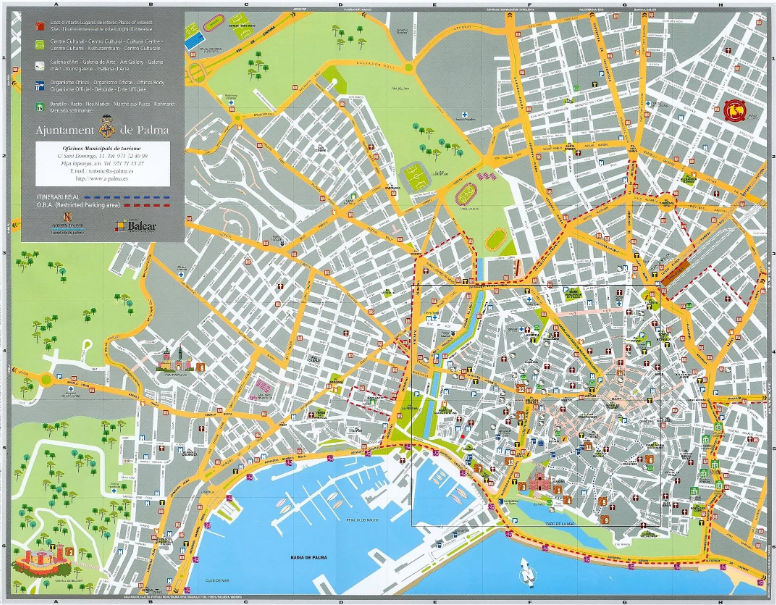 One of the most efficient ways to navigate this beautiful city is by using its well-organized public transport system.
1. EMT Buses
Palma’s primary mode of public transportation is the extensive bus network operated by Empresa Municipal de Transports Urbans de Palma (EMT). The buses are modern, clean, and cover nearly every part of the city, making them a convenient choice for tourists.
Key Points:
- Routes and Timetables: EMT buses have over 30 routes, each identified by a number. Key routes for tourists include Route 1 (Airport to City Center), Route 3 (Illetes Beach), and Route 25 (S’Arenal Beach). Timetables are available at bus stops and online on the EMT Palma website or app.
- Tickets and Fares: Single tickets cost around €2 and can be purchased directly from the driver. For frequent travel, consider the Bonobus card, available at kiosks and tobacco shops, which offers discounted fares. The Palma Pass, a tourist card, includes unlimited bus travel and discounts to various attractions.
- Night Buses: Palma offers night bus services (NitBus) on weekends, ensuring safe and convenient travel even after dark. Routes N1 and N2 cover major nightlife spots and run until 4 a.m.
2. Metro and Trains
The metro and train services in Palma, operated by Serveis Ferroviaris de Mallorca (SFM), connect the city with its outskirts and other towns on the island. While the metro system is limited, it is efficient for reaching certain destinations.
Key Points:
- Metro: Palma’s metro has two lines: M1 (Palma to UIB, the University) and M2 (Palma to Marratxí). Metro stations are well-marked, and trains run frequently. Tickets can be bought from machines at the stations.
- Trains: The train services are more extensive, connecting Palma with towns like Inca, Manacor, and Sa Pobla. This is ideal for day trips outside the city. The main train station, Estació Intermodal, is located in Plaça d’Espanya.
- Tickets and Fares: Train tickets are based on zones. Prices vary depending on the distance traveled. Tickets can be purchased at stations or online. Consider the Tarjeta Intermodal card for frequent use, offering reduced fares.
3. Taxis
While buses and trains cover most of the city, taxis are a convenient option for more direct routes or when traveling with heavy luggage.
Key Points:
- Availability: Taxis can be hailed on the street, found at designated ranks, or booked via phone. They are usually white with a red and yellow stripe.
- Fares: Taxis use meters, and fares include an initial charge plus a per-kilometer rate. Additional charges may apply for airport trips, luggage, or night rides. Most taxis accept credit cards, but it’s advisable to carry some cash.
- Apps: Taxi apps like MyTaxi and Cabify are popular in Palma, allowing you to book and pay for rides using your smartphone.
4. Bicycles and E-Scooters
For an eco-friendly and enjoyable way to explore Palma, consider renting a bicycle or e-scooter. The city has numerous bike lanes and scenic routes, especially along the seafront promenade.
Key Points:
- Rental Services: Many shops in the city center offer bicycle and e-scooter rentals. Prices vary, but expect to pay around €10-€15 per day for a bike and €20-€30 for an e-scooter.
- Bike Sharing: Bicipalma, the city’s bike-sharing program, is another option. With stations across Palma, you can pick up and drop off bikes at different locations. A subscription or short-term pass can be purchased online or at kiosks.
- Safety: Helmets are recommended, and e-scooter users must adhere to local traffic rules, including speed limits and designated parking zones.
5. Boat Services
Given Palma’s coastal location, boat services offer a unique perspective of the city and access to nearby attractions.
Key Points:
- Ferries: Ferries operate from Palma’s port to various destinations, including other Balearic Islands and mainland Spain. Companies like Balearia and Trasmediterranea offer regular services.
- Boat Tours: Numerous operators offer sightseeing boat tours around Palma Bay, providing stunning views of the city’s skyline and landmarks like the Cathedral of Santa Maria (La Seu). These tours range from short excursions to full-day trips.
Palma de Mallorca off the beaten track
Palma de Mallorca is renowned for its stunning beaches, vibrant nightlife, and historic landmarks like the majestic La Seu Cathedral.
Top 10 things to see and do in Palma
Mallorca features in almost every tourist brochure that covers Spain and in some people’s minds, it is full of lager

10 places to visit on a day trip from Palma
The nice thing about a small island is that pretty much anywhere on the island constitutes a day trip from

A guide to fiestas in Palma and Mallorca
The island’s fiestas are a testament to its rich heritage, blending historical, religious, and folklore elements into celebrations that captivate