
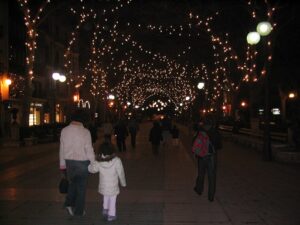
 Christmas in Spain is a rich and colourful season that blends deep-rooted religious traditions with lively social celebrations, regional customs and an unmistakable love of food. Stretching from early December through to early January, the festive period is less about a single day and more about a succession of events that bring families, friends and entire communities together.
A Season That Begins Early
The Spanish Christmas season officially begins on 8 December with La Inmaculada Concepción (the Feast of the Immaculate Conception), a public holiday in many regions. From this point on, towns and cities are illuminated with festive lights, Christmas markets appear in main squares, and homes begin to display elaborate belenes (nativity scenes).
Unlike in some countries where Christmas Day is the main focus, Spain places just as much importance on Christmas Eve (Nochebuena), New Year’s Eve (Nochevieja), and especially Epiphany on 6 January (Día de los Reyes Magos), when children traditionally receive their presents.
Christmas Eve and Christmas Day
Christmas Eve is a family-centred occasion. Extended families gather for a long, celebratory dinner that often lasts late into the night. In many parts of Spain, families attend La Misa del Gallo (Midnight Mass), named after the legend that a rooster crowed at the birth of Christ.
Christmas Day (Navidad) is generally calmer, devoted to relaxed lunches, visits to relatives and quiet time at home. While presents may be exchanged, particularly in recent years, the real excitement is usually reserved for early January.
Typical Christmas Food in Spain
Food plays a central role in Spanish Christmas celebrations, with menus varying by region but always abundant.
Savoury Dishes
Christmas Eve and Christmas Day meals often include:
Seafood such as prawns, langoustines, clams and lobster, especially in coastal areas
Roast meats, including lamb (cordero), suckling pig (cochinillo) or turkey
Soups and stews, like escudella i carn d’olla in Catalonia or caldo gallego in Galicia
Meals are typically shared over several courses and accompanied by good wine, cava or sherry.
Christmas Sweets
No Spanish Christmas is complete without traditional sweets, many of which have Moorish or medieval origins:
Turrón, a nougat made with almonds and honey, is the most iconic festive treat
Polvorones and mantecados, crumbly shortbread-style biscuits from Andalusia
Mazapán (marzipan), especially associated with Toledo
These sweets appear in homes weeks before Christmas and are enjoyed throughout the festive season.
Unique Spanish Traditions
Nativity Scenes (Belenes)
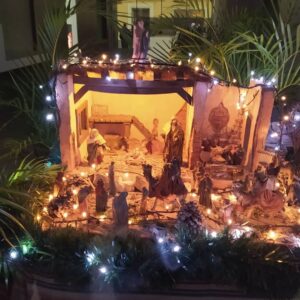 Nativity scenes are an essential part of Christmas in Spain. Many families create detailed displays at home, while towns and cities often organise exhibitions featuring elaborate, life-sized figures. Barcelona, Madrid and Seville are particularly known for their impressive public belenes.
The Christmas Lottery (El Gordo)
On 22 December, Spain comes to a standstill for the drawing of El Gordo, the world’s largest lottery. Entire offices, families and villages often share tickets, and the televised draw—sung by schoolchildren—is a national event in itself.
New Year’s Eve and the Twelve Grapes
New Year’s Eve (Nochevieja) is celebrated with parties, dinners and public gatherings. At midnight, Spaniards eat twelve grapes—one for each chime of the clock—to bring good luck for the coming year. Madrid’s Puerta del Sol is the most famous setting for this tradition.
Three Kings’ Day: The Grand Finale
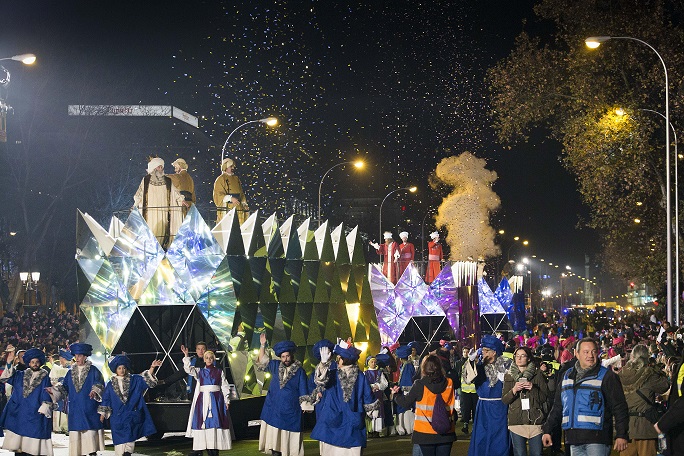
For many Spaniards, the highlight of Christmas is Día de los Reyes Magos on 6 January. On the evening of 5 January, colourful parades (Cabalgatas de Reyes) take place across the country, with the Three Wise Men throwing sweets to children lining the streets.
Children leave their shoes out overnight, along with water or treats for the camels, and wake up to find gifts the next morning. Families then gather to share Roscón de Reyes, a ring-shaped cake decorated with candied fruit. Hidden inside are a small figurine and a dried bean—finding the figurine brings good luck, while the person who finds the bean traditionally pays for the cake.
Whether enjoyed in a bustling city square, a small rural village or along the Mediterranean coast, the Christmas season offers visitors a chance to experience Spain at its most welcoming.
The vibrant fiestas of Seville: culture, tradition & joy
What truly sets Seville apart are its vibrant fiestas. These celebrations, deeply rooted in tradition, offer visitors a unique glimpse
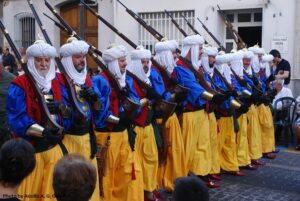
Traditional Fiestas in Almería
Throughout the year, towns and villages across the province of Almeria burst into colour, music, and joy during their traditional
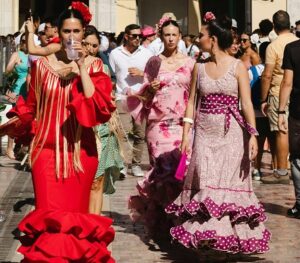
Fiestas in Córdoba
Córdoba comes alive throughout the year with vibrant fiestas that captivate the senses. Whether you’re drawn by music, flowers, horses,
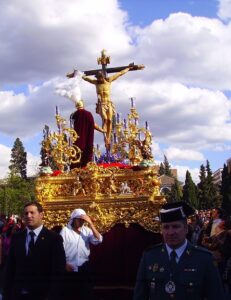
Granada’s fiestas: a celebration of culture
Granada’s vibrant calendar of fiestas are deeply rooted in history and culture, reflecting the spirit of Andalusia — a blend